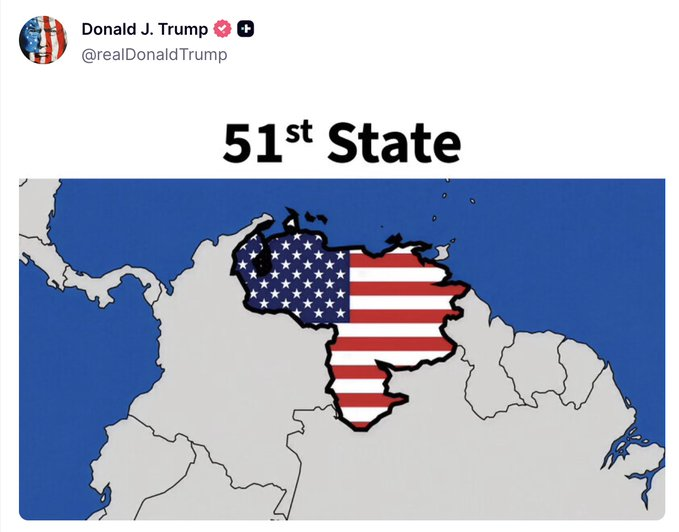
Donald Trump's recent post on Truth Social, proposing Venezuela as the 51st state of the United States, has ignited intense debate about US-Venezuela relations and the implications of such rhetoric. This provocative suggestion comes amid ongoing political turmoil in Venezuela and a complex history of strained relations between the two nations, characterized by economic sanctions and ideological clashes.
The graphic shared by Trump is not merely a whimsical idea; it reflects his long-standing interest in Latin America, especially Venezuela, where he has previously criticized the socialist government. "We need to consider all options for helping the Venezuelan people achieve the freedom they deserve," stated Senator Marco Rubio, a vocal advocate for democracy in Venezuela. This statement underscores the potential political motivations behind Trump's post, as he aims to rally support among his base and draw attention to the plight of Venezuelans.
As the 2026 elections approach, Trump's comments may resonate with voters concerned about national security and immigration. The discourse surrounding Venezuela's status will likely influence future US foreign policy, as the Biden administration grapples with how to respond to these provocative claims while promoting regional stability.