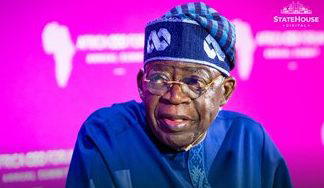
President Bola Tinubu's recent assertion that his economic reforms have alleviated state governments' reliance on salary borrowing marks a significant shift in Nigeria's fiscal landscape. During the inauguration of the Babban-Lamba–Sharam Phase II Road in Plateau, Tinubu emphasized the importance of these reforms in stabilizing state finances, stating, "Our administration has prioritized economic policies that empower states to generate their own revenue."
This development follows years of fiscal distress where many states faced crippling debt, often resorting to borrowing to meet payroll obligations. The introduction of measures aimed at enhancing local revenue generation, alongside improved federal allocations, appears to be yielding positive results. States are reportedly witnessing a gradual increase in internally generated revenue, thus reducing their dependence on loans.
While these reforms present a hopeful outlook for economic independence among states, the sustainability of such progress remains uncertain. Continued commitment to transparency and efficient resource management will be crucial as Nigeria seeks to build a more resilient economy. The government's ability to maintain momentum in these reforms will determine the long-term fiscal health of the states and, by extension, the nation's overall economic stability.