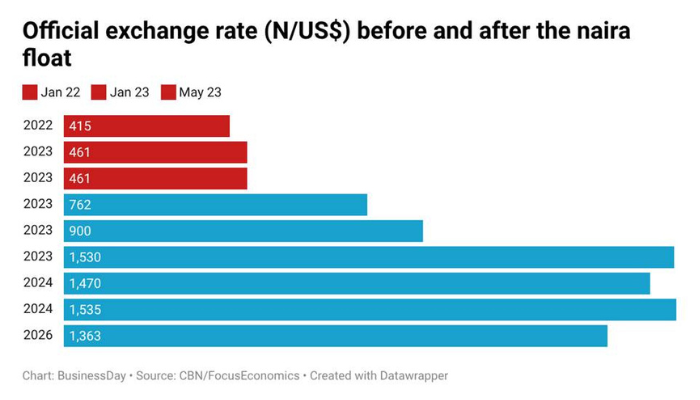
The recent float of the naira marks a pivotal shift in Nigeria’s economic landscape, aimed at stabilizing a currency battered by years of restrictive policies. Since the Central Bank of Nigeria adopted a market-driven exchange rate in June 2023, businesses like Chukwuemeka's printing firm have experienced both relief and challenges. Initially, the float allowed for a more competitive environment, reducing the black market's grip on the currency.
However, the naira's volatility has also led to increased costs for imported materials. Chukwuemeka noted, “The float has made imports unpredictable, and we struggle to maintain prices for our customers.” This sentiment reflects broader concerns among manufacturers, who are grappling with inflationary pressures and fluctuating exchange rates.
While the naira float has succeeded in curbing the black market, it has also exposed the economy to new vulnerabilities. As Nigeria navigates this complex transition, stakeholders must prioritize economic diversification and investment in local production to mitigate future shocks. The coming months will be crucial in determining whether the naira’s float will ultimately foster sustainable growth or exacerbate existing economic disparities.
