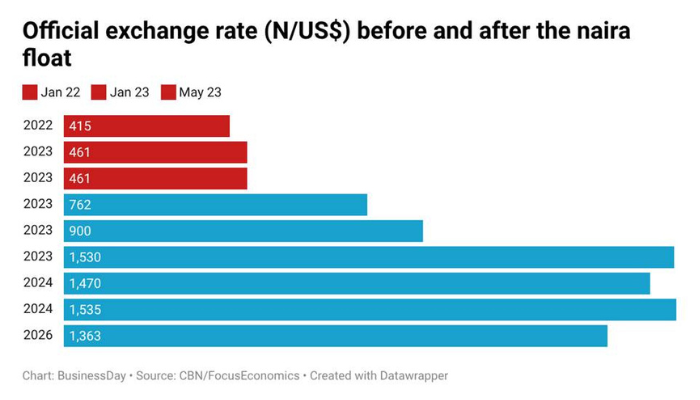
The recent decision to float the Nigerian naira has sparked a complex debate about its impact on the economy. Initially implemented to stabilize the currency and attract foreign investment, the float has produced mixed outcomes for businesses and consumers alike. Chukwuemeka, a printing business owner in Onitsha, experienced firsthand the fluctuations, noting that "the rising costs of imported materials have put immense pressure on our operations."
Since the float, the naira's value has seen significant volatility, leading to increased prices for essential goods and services. While the government aims to create a more competitive market, many businesses struggle to adjust to the new economic landscape. This has heightened inflationary pressures, disproportionately affecting low-income households who rely on stable pricing for daily essentials.
Looking ahead, the sustainability of the naira's float remains uncertain. Policymakers must balance the need for currency stability with measures that protect vulnerable populations from further economic strain. As the situation evolves, targeted interventions may be necessary to ensure that the intended benefits of the naira float do not come at an unmanageable cost to Nigerians.