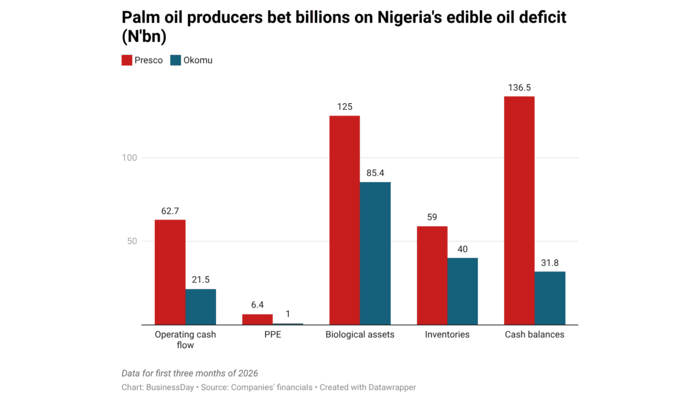
Nigeria's growing edible oil deficit has prompted the country's two largest palm oil producers to invest billions of naira in new plantations. This strategic move comes as domestic supply struggles to meet increasing demand, exacerbated by reliance on imports and fluctuating global prices. With the nation aiming for self-sufficiency, these investments signal a pivotal shift in the agricultural landscape.
Stakeholders recognize the urgency of the situation. "Our commitment to expanding palm oil production is not just about profitability; it's about securing food sovereignty for Nigeria," stated Ayo Olaniyan, CEO of GreenPalm Industries. This sentiment reflects a broader industry perspective, where the focus is on bolstering local production capabilities to mitigate the effects of international market volatility.
Looking ahead, the success of these investments will depend on various factors, including access to technology, infrastructure development, and government support. If executed effectively, this initiative could significantly reduce Nigeria's dependency on imported oil, fostering economic growth and stability in the agricultural sector. The coming years will be crucial in determining the sustainability of this ambitious endeavor and its impact on the nation's economy.
