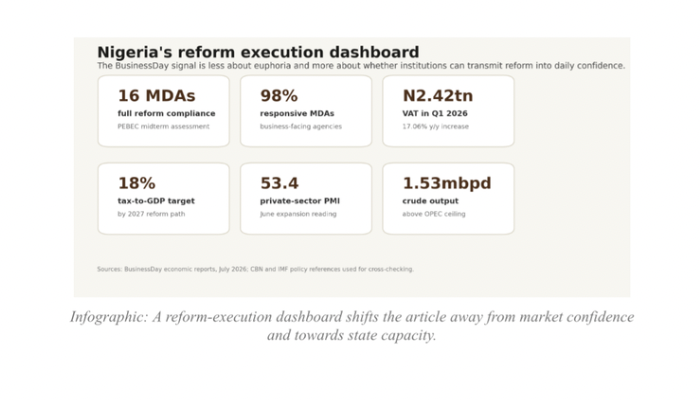
Nigeria stands at a critical juncture as it confronts the challenges of implementing reforms post-stabilisation. The nation has moved beyond the debate of whether reforms are necessary, focusing now on the execution of these policies to foster economic growth and improve living standards. Recent insights reveal concerns regarding the slow pace of change, particularly in key sectors like agriculture and manufacturing.
As Nigeria grapples with food insecurity and industrial stagnation, stakeholders are calling for urgent action. "The time for talk is over; we need tangible results that can restore public confidence in our economic policies," stated Amina Mohammed, Minister of Humanitarian Affairs. This sentiment underscores the urgency felt by many as the country seeks to transition from stabilization to sustainable development.
Moving forward, Nigeria's ability to build trust with its citizens and deliver on promised reforms will be crucial. The focus must shift to practical strategies that enhance agricultural productivity and revive industries to ensure that stabilisation translates into real economic benefits for all Nigerians. The path ahead will require not just policy changes but also a renewed commitment to accountability and transparency.