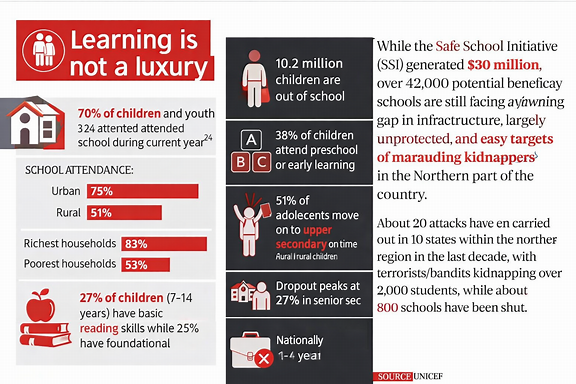
Nigeria’s Safe Schools Initiative starkly illustrates the tension between governmental fiscal ambitions and the harsh realities of insecurity faced by students and educators. With a ₦144.77 billion commitment spanning from 2023 to 2026, the initiative aims to create a safer educational environment amid escalating violence from armed groups. However, the persistent threat of attacks raises questions about the effectiveness of this funding.
Recent statistics reveal that over 1,000 schools have closed due to violence, leaving millions of children without access to education. "We cannot continue to invest in infrastructure while ignoring the safety of our children. It is a moral and fiscal imperative," says Aisha Mohammed, the Executive Director of Safe Education Now. This sentiment underscores the urgency of aligning security measures with educational investments.
Looking ahead, the government must address these challenges by implementing robust security frameworks alongside the financial commitments made. Failure to do so will exacerbate the educational crisis, jeopardizing the future of an entire generation. As the initiative unfolds, the balance between fiscal responsibility and the safety of students will be crucial in determining its success and the overall stability of Nigeria's educational landscape.