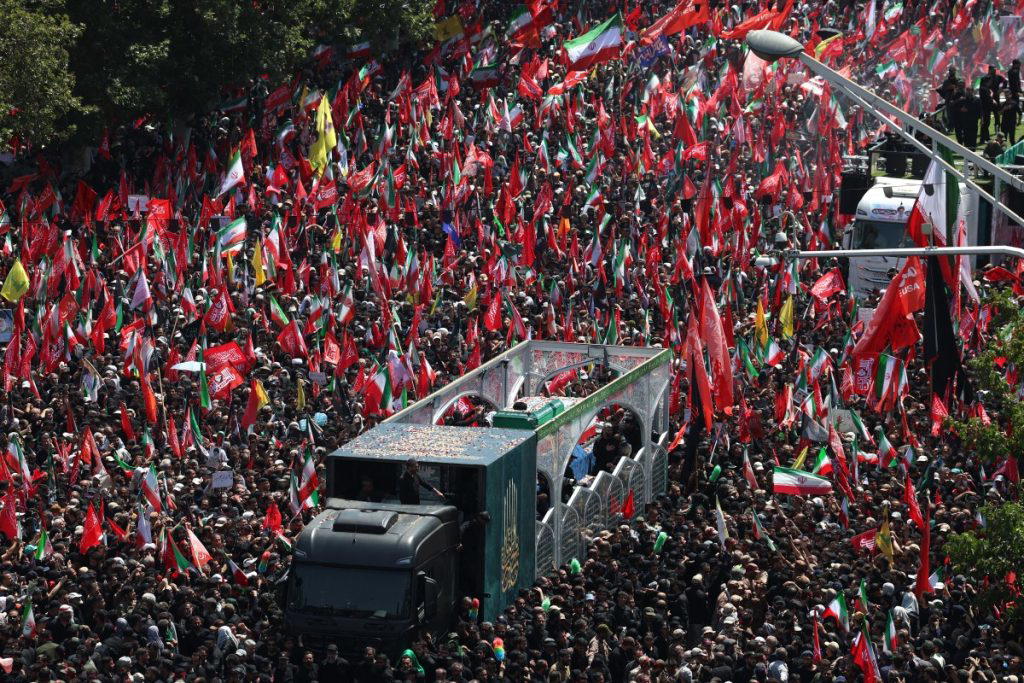
The funeral procession for Iran's late supreme leader, Ali Khamenei, commenced in Tehran, drawing massive crowds reminiscent of the outpouring for his predecessor, Ayatollah Khomeini, in 1989. As state television broadcasted the event, authorities anticipated a significant turnout, highlighting Khamenei's enduring influence over the Islamic Republic's political landscape.
Khamenei, who led Iran since 1989, played a pivotal role in shaping the country's domestic and foreign policies, often steering it through periods of intense international scrutiny and economic hardship. "His legacy will be felt for generations, as his vision shaped the very fabric of our society," stated Mohammad Javad Zarif, former foreign minister. This sentiment echoes the ambivalence surrounding Khamenei's rule, marked by both staunch support for the regime and widespread dissatisfaction among the populace.
Looking ahead, the funeral will likely serve as a litmus test for Iran's political stability. With potential power struggles looming among the ruling elite, the event may either consolidate the existing leadership or ignite factions competing to fill the vacuum left by Khamenei's authoritative presence.