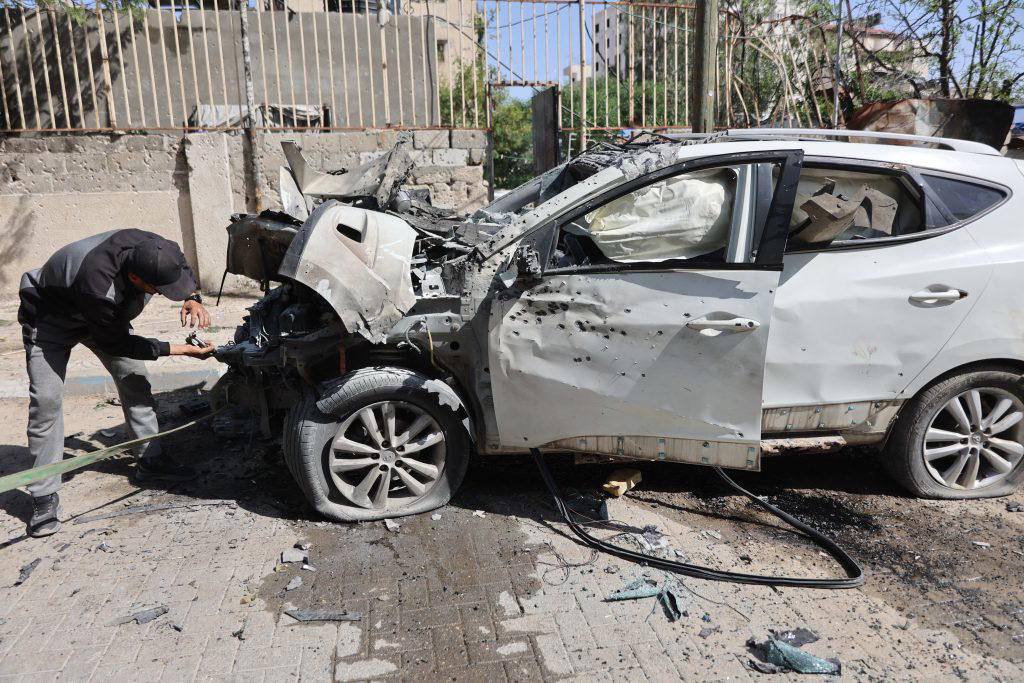
Israeli airstrikes in Gaza have intensified following the killing of Hamas commander Iyad al-Shanbari and his son, Salah, marking a significant escalation in ongoing hostilities. This operation, part of Israel's broader strategy to neutralize Hamas leadership, underscores the deepening cycle of violence that has plagued the region for years.
The strikes are a response to recent rocket fire from Gaza, reflecting Israel's commitment to dismantling what it perceives as threats to its national security. Al-Shanbari was known for orchestrating attacks against Israeli targets, making his elimination a strategic objective for the Israeli military. As tensions rise, the humanitarian toll on civilians in Gaza remains a pressing concern. A spokesperson for Hamas stated, "This will only fuel our resistance; our resolve is stronger than ever."
Looking ahead, the ongoing conflict raises questions about the prospects for peace. The international community remains divided, with calls for de-escalation met by the reality of entrenched hostilities. As both sides brace for further confrontations, the future of Gaza hangs precariously in the balance, with potential repercussions for regional stability.