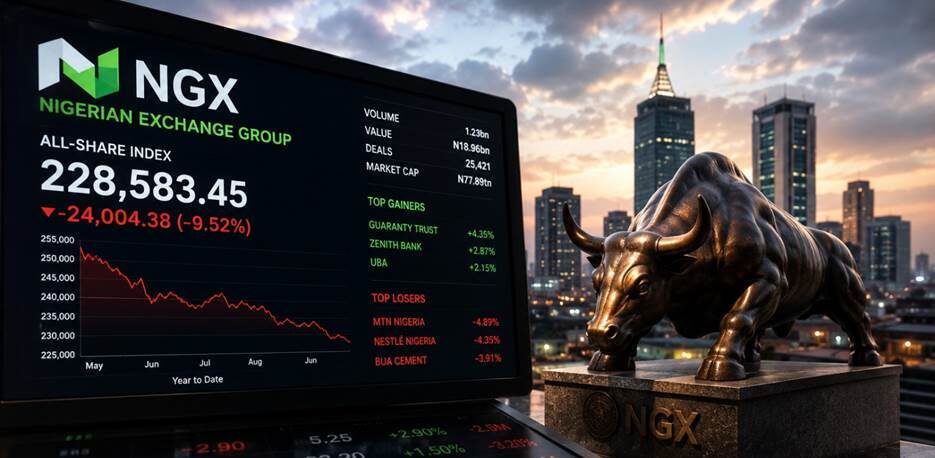
The Nigerian stock market, after peaking in May, has shed over N13 trillion in market value, raising questions about whether this decline signals a necessary correction or a more profound repricing of the nation’s economic recovery. Factors contributing to this downturn include rising inflation, currency volatility, and a lack of investor confidence amid an increasingly uncertain global economic environment.
Market analysts suggest that the current situation may reflect a recalibration rather than a straightforward correction. "Investors are reassessing the fundamentals of Nigerian companies against a backdrop of economic instability," said Adebayo Afolabi, Chief Economist at Zenith Bank. This sentiment highlights the delicate balance between optimism for Nigeria’s long-term prospects and the harsh realities of its present economic challenges.
As the market grapples with these issues, stakeholders are closely watching government policies and global economic trends that could either stabilize or further impede recovery. The coming months will be critical, as investors will need to navigate this complex landscape to determine whether recent losses are a temporary setback or indicative of a more significant shift in Nigeria’s economic narrative.

