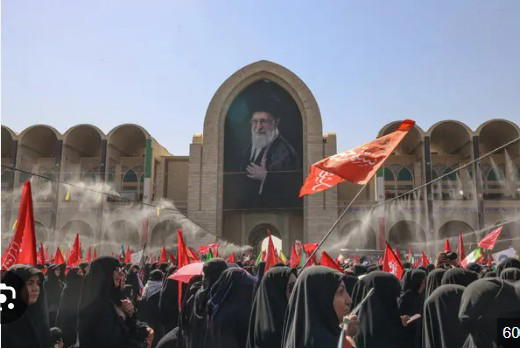
The recent death of Ali Khamenei, the longtime leader of Iran, has ignited a wave of mourning across the nation, yet the absence of his son and designated successor raises questions about the future of Iran's leadership. Khamenei was killed in an airstrike on February 28, coinciding with the onset of a US-Israeli military campaign against Iran, creating a power vacuum that could destabilize the Islamic Republic.
Iranians gathered in mosques and public spaces to pray for their fallen leader, a man who shaped the country's policies for nearly four decades. Despite the public outpouring of grief, the conspicuous absence of Mojtaba Khamenei, once seen as the heir apparent, has left many wondering about the succession plan. "In times of loss, unity is vital, but leadership must also be clear," stated political analyst Fatemeh Alavi.
As the nation grapples with uncertainty, the potential for internal conflict and power struggles looms large, making the coming weeks critical for Iran's stability. The leadership's response will not only shape the immediate future but also influence Iran's long-term geopolitical standing.
