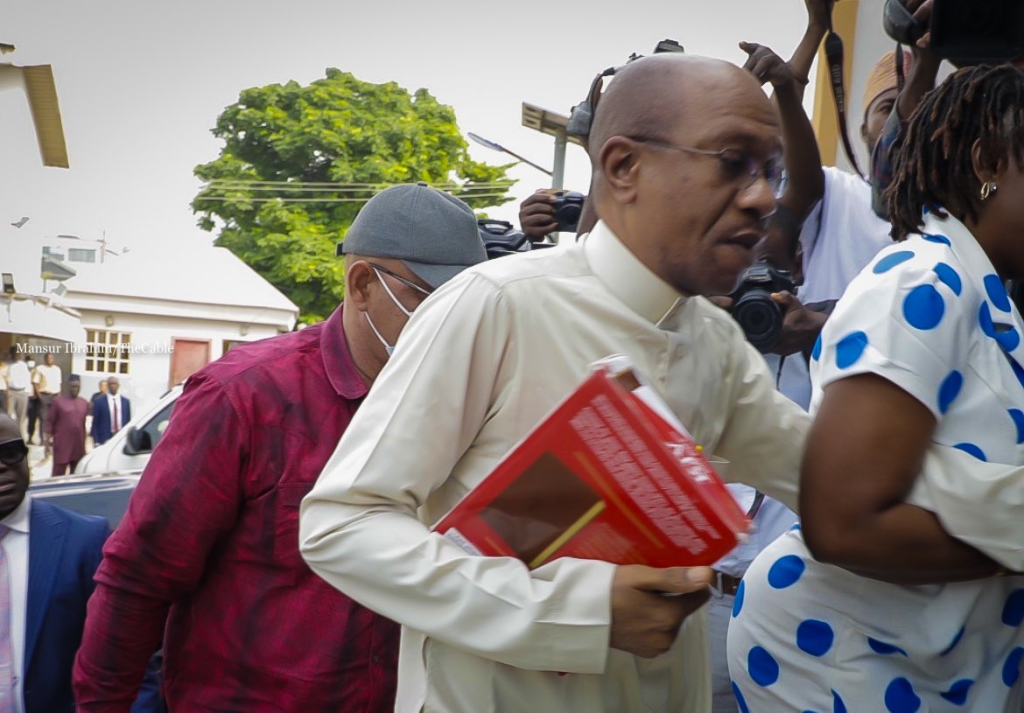
In a significant turn of events, a court has officially accepted newspaper publications as evidence in the trial of Godwin Emefiele, the suspended Governor of the Central Bank of Nigeria. This decision marks a crucial step in a case that has drawn considerable public and media attention, revolving around allegations of financial misconduct during Emefiele's tenure.
During the proceedings, a witness clarified their role as a certifier of the newspapers, stating, “What I do is to certify the newspapers. I cannot 100 per cent say the contents of the papers are right; I am not the author.” This admission raises questions about the reliability of media reports as evidence, a crucial aspect in determining Emefiele's guilt or innocence. Given the political implications of this case, the court's acceptance of such evidence may set a precedent for how media publications are treated in judicial processes.
As the trial progresses, observers will be keenly watching how the court navigates the complex interplay between media credibility and legal accountability. The outcome could have lasting ramifications not only for Emefiele but also for the integrity of future judicial proceedings in Nigeria.